Security Efficiency That Doesn't Increase Risk
In 2025, the average breach took 241 days to identify and contain, the lowest figure IBM has recorded in nine years. Organizations that used AI and automation across their security operations cut that lifecycle by roughly 80 days and spent about $1.9 million less per breach. One measure moves both cost and risk: how long it takes a team to reach a confident decision. That is why a well-built program treats security productivity and risk reduction as a single initiative rather than two competing budget lines.
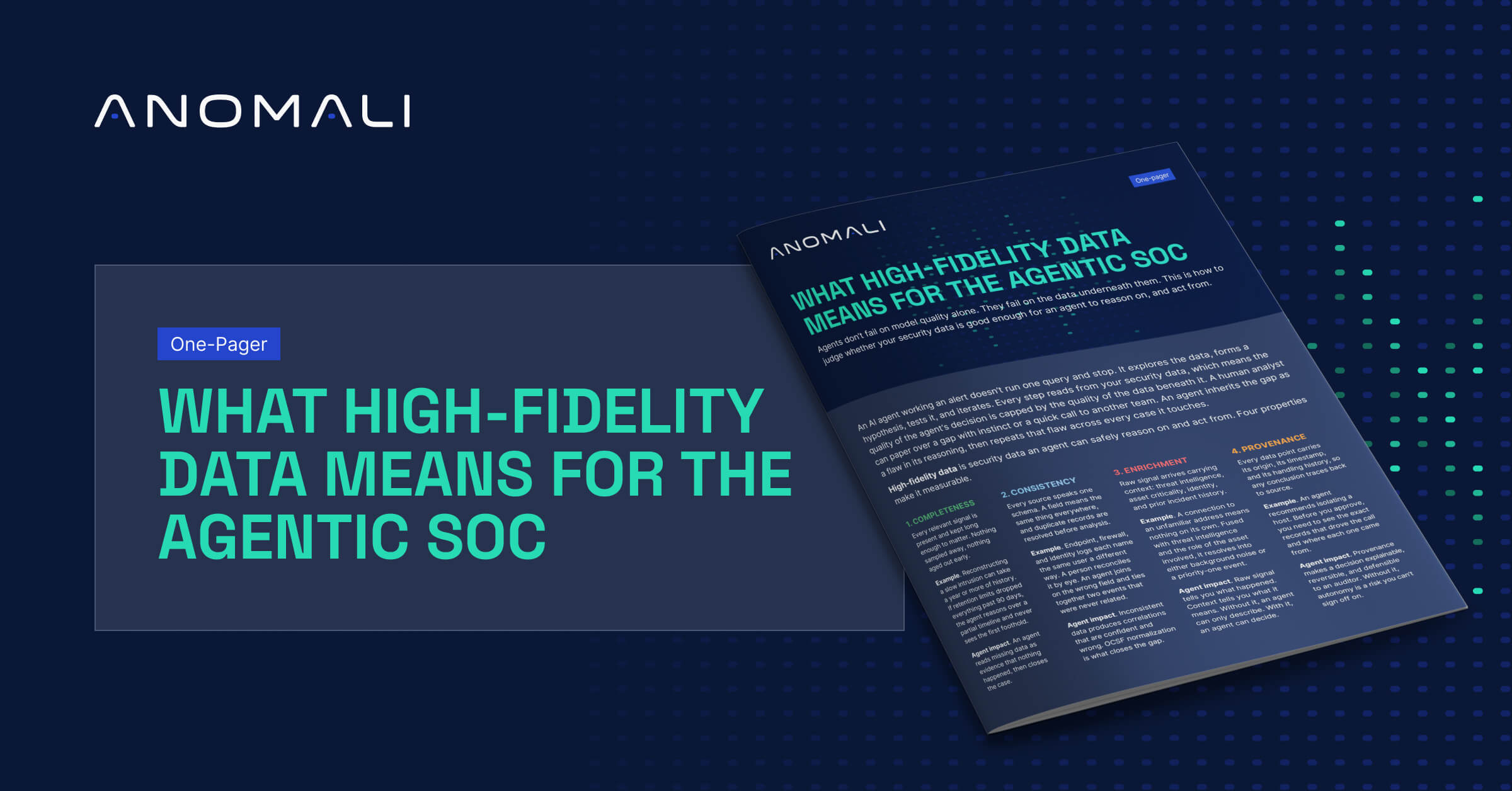
Inside the brief
• Why AI that speeds up individual tasks often leaves total analyst workload unchanged, and what removing noise before it reaches a person changes about the math
• The three controls that make faster operations defensible to a board, an auditor, or a regulator: traceability, auditability, and calibrated quality thresholds
• The four outcomes leadership should track, and why time to decision deserves the most weight
• The governance gap behind AI-related breaches: IBM found 97% of affected organizations lacked basic AI access controls and 63% had no AI governance policy
FAQ
Does using AI in security operations increasebreach risk?
Speed raises risk only when it removes the ability to explain a decision. IBM found that 97%of organizations hit by an AI-related breach lacked basic AI access controls, and 63% had no governance policy at all. The exposure comes from deploying AI ahead of the controls around it. Traceability, auditability, and calibrated autonomy keep faster operations defensible.
Can security cost reduction and risk reductionhappen at the same time?
Yes, and both track back to time to decision. When a program resolves uncertainty before an alert reaches an analyst, cost falls because less low-value work runs through expensive people, and risk falls because real intrusions surface while there is still margin to act.
What should security leaders measure to provethe result?
Four outcomes: fewer alerts requiring human review, shorter investigations, reduced escalation to senior engineers, and faster time to decision. Time to decision carries the most weight, since IBM's data ties longer detection and containment directly to higher breach cost.
Discover More About Anomali
Dive into more great resources about Anomali's Security and IT Operations Platform, cybersecurity trends, threat intelligence, Anomali's technology partners, and more.