Why High-Fidelity Data Decides What Your Agentic SOC Can Do
Security teams spent the last decade getting good at detection. The harder problem now sits one step downstream: turning a signal into a defensible action fast enough to matter, without a human re-checking every move. That is where AI agents are meant to help. Whether they actually can depends less on the model and more on the data underneath it.
An agent investigating an alert reaches back across telemetry, forms a hypothesis, and tests it before it concludes. Feed it fragmented, sampled, or unenriched data and it reaches a fast, confident, wrong answer. When that answer drives an automated response, the speed works against you. An agent can block the wrong thing at machine speed and cause the incident it was meant to prevent. This is why data fidelity, more than compute, sets the ceiling on what a SOC leader can safely authorize.
What fidelity actually measures
More logs do not make a SOC smarter. A larger store of low-quality data gives an agent more ways to be wrong. Fidelity describes whether the data an agent reasons over is fit for a decision, and it comes down to four things: whether signal is complete and retained long enough, whether every source resolves to one schema, whether events arrive already enriched with scored intelligence, and whether each record carries the provenance to trace and reverse a conclusion. For a CISO, that last property is the line between an autonomous action you can defend in an audit and one you cannot.
Where the time goes back
Some of the most expensive minutes in a SOC are spent rebuilding context that should already be attached to the alert. When intelligence is correlated with events as they land, an analyst opens an alert with the context already there. Hours shift away from manual correlation toward the investigation and response calls that stay with people, which matters most where skilled analysts are scarce.
Read the guide
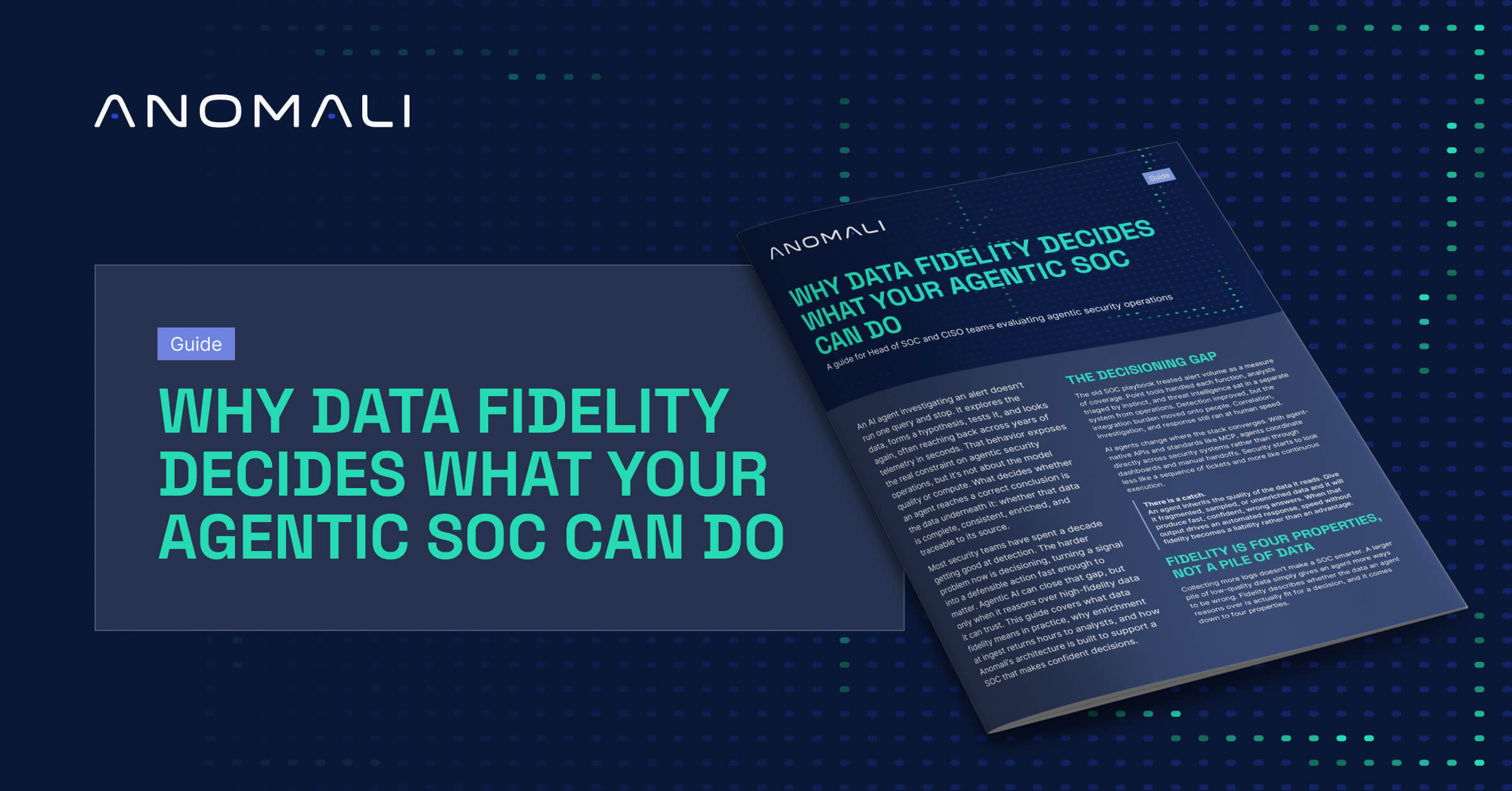
Why Data Fidelity Decides What Your Agentic SOC Can Do is written for Head of SOC and CISO teams evaluating agentic security operations. It covers each of the four properties in depth, how graded autonomy works in practice (blast radius calculated before any action, every decision logged and reversible), and the architectural choices that let you enrich data on Databricks, Snowflake, Sentinel, or S3 without a rip-and-replace.
Discover More About Anomali
Check out some of our other great resources covering the latest cybersecurity trends, threat intelligence, security and IT operations, and Anomali product updates.