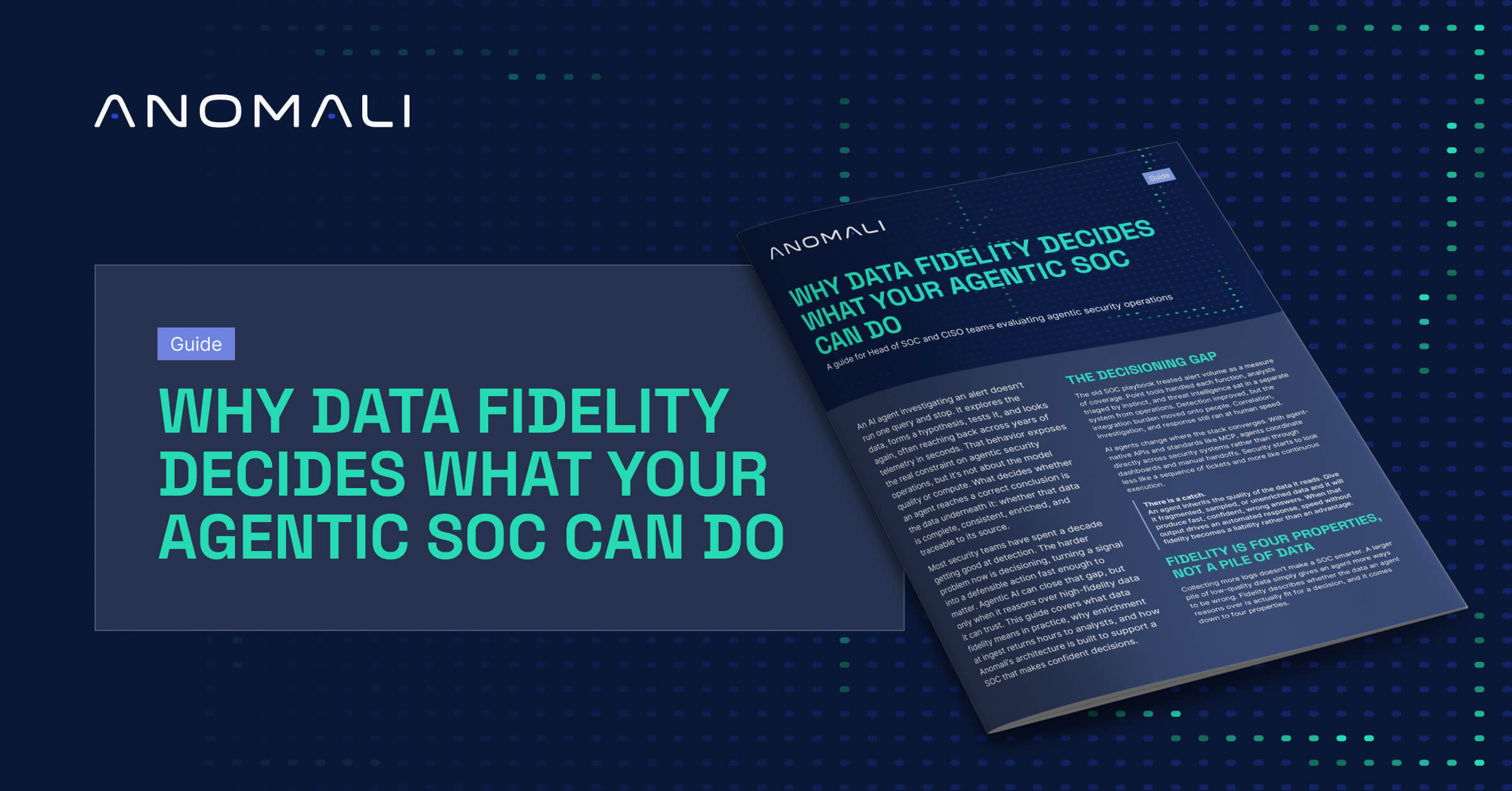
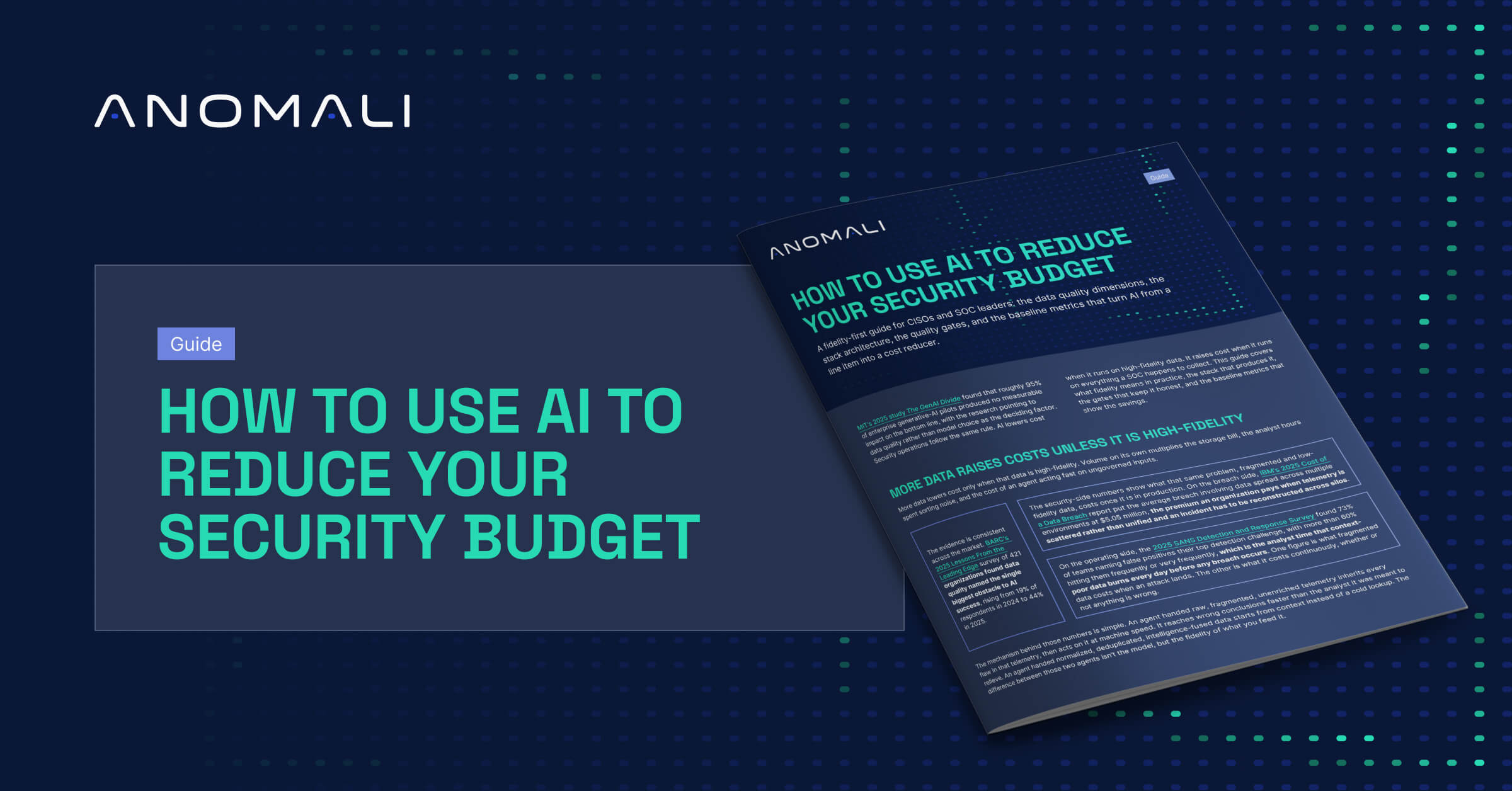
How to Use AI to Reduce Your Security Budget
MIT's 2025 study The Gen AI Divide found that roughly 95% of enterprise generative-AI pilots produced no measurable impact on the bottom line, with the research pointing to data quality rather than model choice as the deciding factor. Security operations follow the same rule. AI lowers cost when it runs on high-fidelity data and raises it when it runs on everything a SOC happens to collect. This guide covers what fidelity means in practice, the stack that produces it, the gates that keep it honest, and the baseline metrics that showt he savings.
Inside the guide
• The four dimensions of data fidelity, completeness, consistency, enrichment, and provenance, and the cost each one drives
• The three-layer agentic SOC stack that takes cost out at a different point in the pipeline, with no rip-and-replace and non ew single-vendor dependency
• The quality gates that catch malformed data, collapse duplicates, and score enrichment before anything reaches an agent
• The baseline metrics that let you attributesavings to a cause, so the next budget conversation runs on your own numbers
Discover More About Anomali
Check out some of our other great resources covering the latest cybersecurity trends, threat intelligence, security and IT operations, and Anomali product updates.